
California’s Program of All‑Inclusive Care for the Elderly (PACE) is entering a pivotal moment.
Across the United States, demand for community‑based care models is accelerating as the population ages and policymakers search for alternatives to institutional care. PACE has quietly become one of the most successful examples of this shift. More than 100,000 older adults are currently served by PACE programs nationwide, and enrollment has grown roughly 10–15% annually in recent years as states continue expanding the model.
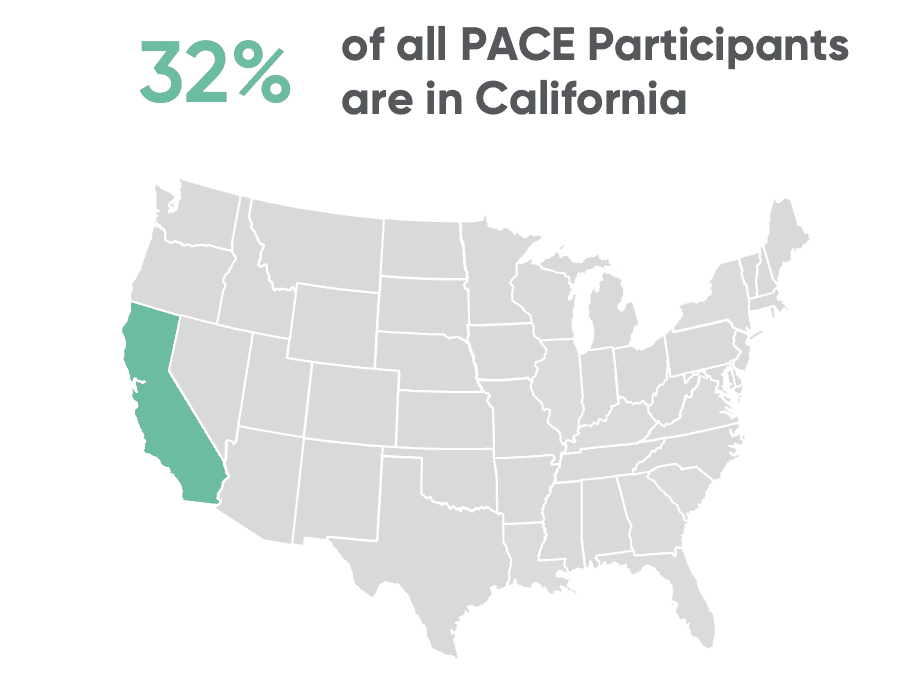
California has long been the epicenter of that growth—and it is also where the PACE model began, originating in San Francisco’s Chinatown in the early 1970s.
The state has the largest PACE footprint in the country and some of the most mature programs operating today. But at the tail end of last year California paused new PACE applications and service area expansions while the Department of Health Care Services (DHCS) reassesses oversight, operational performance, and long‑term sustainability of the program.
For many in the industry, the moratorium felt abrupt.
But it also reflects something deeper: PACE has reached a stage of maturity where the conversation is no longer about whether the model works. The question now is whether it can scale responsibly.
Evidence supporting the model is strong. Research comparing PACE participants to similar Medicare and Medicaid populations consistently shows lower rates of nursing home placement, fewer hospitalizations, and strong participant satisfaction.
PACE has proven that coordinated, community‑based care can work for some of the most complex and medically fragile populations in the healthcare system.
Learn how Dina helps PACE organizations drive closed loop scheduling and communication with in home-service vendors , improve visibility into service delivery , significantly reduce administrative spend, and improve outcomes associated with in-home care.
Set up a quick meet and greet call today.
The challenge today is different. It is the operational infrastructure required to support the model at scale.
California’s pause on new PACE expansion reflects a broader policy objective: ensuring the model remains strong as it scales.
The state’s Department of Health Care Services has signaled that the review will focus on program oversight, operational performance, and safeguards designed to prevent fraud, waste, and abuse while ensuring participants receive timely services.
For existing organizations, the current moment creates an opportunity. Programs can use this period to evaluate their provider networks, standardize operational workflows, and get ahead of evolving compliance expectations that increasingly resemble the transparency and reporting standards seen in Medicare Advantage.
That means strengthening operational infrastructure while leaning into technology that creates greater visibility into how services are actually delivered. Organizations that invest in better data and reporting capabilities will be better positioned to demonstrate performance to regulators and state partners.
This includes the ability to:
- Monitor access to services
- Track utilization patterns
- Measure participant satisfaction
- Reconcile invoices against authorizations and confirmed service delivery
Importantly, these insights should not only exist at a program level but also at a granular level:
- Vendor by vendor
- Service by service
- PACE center by PACE center
While also rolling up into a holistic view of network performance across the organization.
Programs that can standardize workflows, strengthen network management, and generate this level of operational transparency will be well positioned to demonstrate strong performance and participant outcomes. In that context, the current pause could ultimately lead to a more sustainable next phase of PACE expansion.